
Jenmon | Blogs
How to Choose an Explosion-Proof Hoist for Offshore and Petrochemical Operations
Apr
Safety is the first thing that comes to mind when handling offshore or petrochemical facilities. You must deal with gas, dust, and vapour. A single spark can lead to severe repercussions. That is why you should have the appropriate explosion-proof hoist for the job.
But which one is the right choice? You can’t simply grab any hoist and hope it works. You must know your surroundings, your lifting requirements, and the safety regulations that govern them. This guide will walk you through the essential factors to consider.
Understanding Explosion-Proof Hoists and Their Role
An explosion-proof hoist is a lifting device designed to operate in hazardous conditions. It operates in areas where flammable gases, dust, or vapour may be present. These hoists are set up to prevent any source of ignition, e.g., a spark or heat.
These hoists are frequently employed on offshore rigs or chemical plants with a crane system. They help you take loads without exposing yourself to an explosive event.
What makes them different? They come with sealed parts, strong enclosure systems, and specialised materials. These features stop sparks and keep the hoist safe during normal operation.
What Makes an Area Hazardous?
You should be aware of the workspace before deciding on a hoist. Sites are not all risky.
A hazardous area is one typically characterised by explosive atmospheres. They are formed by mixing combustible gas, vapour, or dust with air. When there is an ignition source, it may lead to an explosion.
You’ll also hear about zone classification. This helps you measure the level of risk:
- Zone 1: Explosive gas may appear during normal operation
- Zone 2: Explosive gas appears only for a short time
This classification matters a lot. You must match your explosion-proof hoist to the correct zone.
Failure to get this right may pose risks to both your team and the worksite.
Key Features of an Explosion-Proof Hoist
When choosing a hoist, lifting power is not the only factor to consider. Focus on safety and build quality.
Start with the enclosure. A good explosion-proof hoist has a sealed enclosure that prevents sparks from escaping. This stops any ignition from reaching the outside environment.
Next, check the motor. It should run without overheating and handle heavy-duty work. A strong motor improves reliability and keeps your operations smooth.
You should also look at the seal and internal parts. These must resist dust and gas. High-quality hoists are designed to prevent sparks, even under pressure.
Lastly, make sure the hoist meets strict safety standards. This ensures it works safely in hazardous environments every day.
Types of Explosion-Proof Hoists
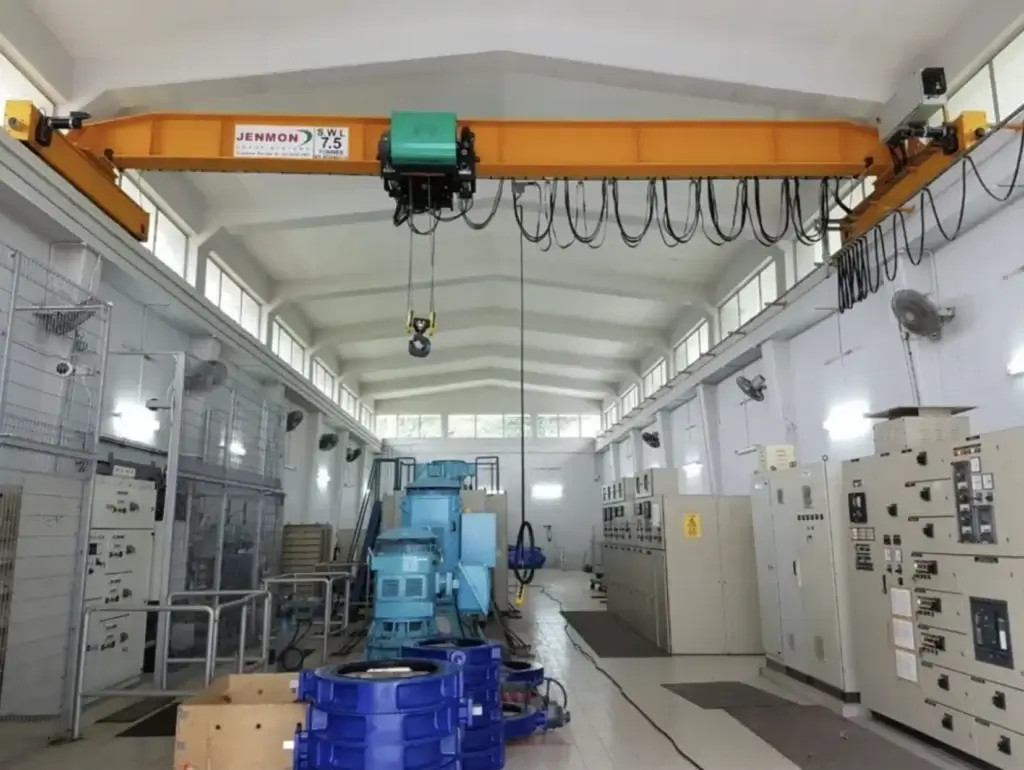
There are various kinds of hoists available. All of them are suitable for a particular need.
An electric hoist works well for smooth and frequent lifting. Many offshore sites prefer explosion-proof electric hoists because they offer control and speed.
Chain hoists, on the other hand, are applicable to smaller tasks or localised lifting. They are straightforward and dependable, but they do not necessarily handle large loads as well as electric models.
Consider your workload when you make a decision. Do you need fast lifting? Go for an electric hoist. Do you need simple and tough equipment? A chain hoist may work better.
Choosing the Right Explosion-Proof Hoist for Your Needs
Let us now proceed with selecting the appropriate explosion-proof hoist for your site.
Start with load capacity. You require a hoist that can raise your weight without strain.
The second step is to examine your surroundings. Offshore locations and chemical refineries are frequently subjected to high winds, salt, and constant exposure to gas. You require gear designed to operate under such circumstances.
Consider the frequency of use of the hoist. Lifting is often done repeatedly, so it requires a heavy-duty, robust design and high reliability.
You should also ask yourself whether the hoist will fit your crane system. With a good match, it will be easy to lift and have control.
Common Mistakes to Avoid
Many individuals approach this process hastily, which can lead to problems.
Overlooking hazardous classification is a common mistake. Failure to match the hoist to the correct zone increases the risk of ignition.
Another common error is selecting the wrong type of hoist. Using a simple chain hoist in a heavy-duty environment may slow the work down and cause it to wear out.
There are also those who forget about reliability and maintenance. A hoist might appear powerful initially, but it must work effectively in the long run.
These are some of the errors to avoid, which will make your team safer.
Conclusion
The right explosion-proof hoist is a decision that must be made. You should know what is going on around your site, follow safety measures and use equipment that fits your lifting needs.
A safer workplace is achieved when you concentrate on safety, reliability and proper classification. This is most important in dangerous conditions.
Still unsure which Explosion-Proof Hoist to select? We can assist you in case you are not sure where to begin. We know how complicated such decisions are at Jenmon. We collaborate with you in selecting the appropriate hoist and crane solutions for your location.
Let us make your operations safer, more reliable, and prepared for any challenge.
