
Jenmon | Blogs
Overhead Crane Repair in Singapore: What to Expect During an Emergency Repair
Aug
Your overhead crane has stopped mid-lift, and the work behind it is waiting. In an emergency, the priority is getting the right help quickly. But what happens when you make the call? Who will you speak to, what information will they need, and how quickly can a repair team get to your site?
When you call an overhead crane repair company in Singapore, the first thing that happens is a short phone check. The team will need details about the crane and the fault so they can assess the situation and determine the right response. If a genuine fault is affecting your production, you can also reach our emergency line outside normal office hours, so support is available when you need it. Once on site, the priority is to identify the fault, determine whether it can be repaired immediately, and get the crane back to a safe working condition.
What Happens When You Call for Emergency Overhead Crane Repair?
The initial call is focused on understanding the fault. Be ready to explain what the crane was doing when it stopped and any warning signs you noticed, such as unusual sounds, smells or electrical issues. This helps the technician prepare for the response and assess what may be needed on site.
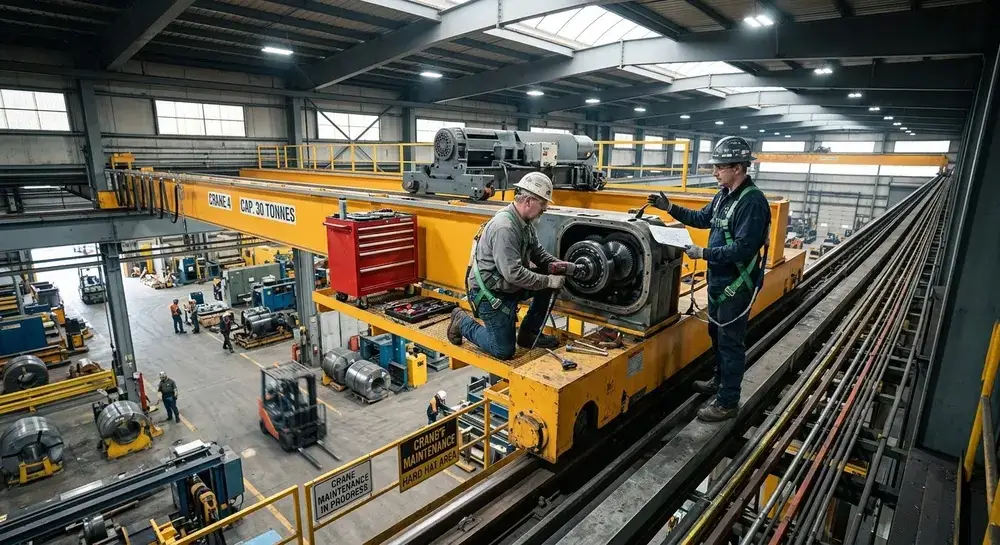
From there, a technician can be sent out to diagnose and repair the fault. On site, the repair involves three key priorities: isolating the crane safely, finding the root cause rather than just the symptom, and either fixing it on the spot or determining what further work is required.
Our overhead crane repair work falls under our wider 24-hour emergency response and stand-by service, which covers unplanned breakdowns rather than scheduled work.
Is It an Emergency, or Can the Repair Wait?
Not every crane fault requires the crane to stop immediately, but any unusual issue should be reported as soon as it is noticed to prevent a minor fault from developing into a costly breakdown.
| Sign | Emergency (stop and call now) | Call for assessment before continuing |
| Noise | Sudden grinding or a loud bang | Mild, gradual increase in noise over weeks |
| Braking | Load drifts, or brake doesn’t hold | Brake feels slightly less sharp than usual |
| Electrical | Burning smell, tripped breaker that won’t reset | Occasional, brief control lag |
| Load behaviour | Uncontrolled swing or drop | Occasional or unusual changes in load movement |
| Visible damage | Cracked hook, snapped wire strand | Light surface rust, no structural sign |
If in doubt, stop using the crane and seek professional advice.
Even less urgent signs are worth a call rather than a wait-and-see approach. Intermittent issues can go unnoticed for weeks, and by the time they surface again, the underlying problem may have worsened—for example, an intermittent fault could eventually lead to a burnt-out motor. Flagging the issue early, even when a fault seems minor, gives the repair team a chance to identify and address the problem before it becomes a bigger and more costly job.
Why Do Overhead Cranes Fail in the First Place?
Some crane failures develop gradually through wear and deterioration, while others can occur more suddenly. According to the Ministry of Manpower’s Workplace Safety and Health report for 2024, workplace fatalities in Singapore rose to 43 that year, up from 36 in 2023. Construction and manufacturing remained among the top contributors to workplace fatalities and major injuries. These figures highlight the importance of maintaining equipment and managing workplace safety risks. For overhead cranes, regular inspection and maintenance can help identify wear or defects before they affect safe operation.
Potential causes include worn brake components, fatigue or deterioration of lifting components, electrical faults, and overloading beyond the crane’s rated capacity.
What Does a Proper Repair Visit Actually Include?
A proper repair visit should address the immediate fault while also considering whether it points to a wider issue.
After a major repair or modification, the crane may need further examination and testing before it returns to service, depending on the work carried out. Our testing and commissioning service includes load testing and visual inspection where applicable.
We will also flag anything that looks like it is heading toward another failure. This is often when a one-off repair turns into a conversation about starting a proper maintenance schedule, instead of waiting for the next breakdown.
Before You Call
Jenmon lists a 4-hour breakdown response as part of its emergency service. If response timing is critical, confirm the expected response time when you call. It is fair to ask for a straight answer on timing when you call, not just a general promise.
The same goes for cost. There is no public rate card for emergency repairs, because the price depends on the fault, the crane type, and whether parts need to be sourced or are already in stock. Where possible, ask about the expected costs before work begins, particularly if parts or additional repairs may be required.
If your crane has stopped and production is waiting, send us an enquiry or call our 24-hour line directly. We will talk through what is happening before anyone gets in a van.
Frequently Asked Questions
Is there overhead crane repair near me in Singapore?
Yes. Jenmon provides overhead crane repair across Singapore, including 24-hour emergency response for unplanned breakdowns. When you call, provide accurate information about the crane and the fault so the repair team can assess the situation and respond appropriately.
What’s the difference between an emergency repair and scheduled maintenance?
An emergency repair fixes what has already failed. It does not replace a maintenance programme. After a repair, scheduled inspections and maintenance can help identify developing issues before they lead to another breakdown.
How much does an overhead crane repair cost in Singapore?
It depends on the fault, the crane type, and parts availability, so there is no fixed number to quote here. A reasonable step is to ask for a written estimate before work starts, not a verbal one after.
Can any electrician repair an overhead crane?
Not for structural or lifting-related work. BCA’s relevant workheads include ME11 Mechanical Engineering and SY08 Mechanical Equipment, Plant & Machinery. Jenmon is registered with BCA under these workheads.
