
Uncategorized
Lifting Equipment in Singapore: Matching the Right System to Your Site
Sep
You’re setting up a new site, and the equipment list in front of you has more lifting options than you expected, with no clear starting point for which one actually fits.
At Jenmon, we supply a full range of cranes, hoists, and lifting equipment in Singapore for construction, marine, and manufacturing sites. This guide sets out how to match lifting equipment to an actual job, rather than defaulting to whatever’s easiest to source quickly.
What lifting equipment do I actually need for my construction site in Singapore?
Start with the load, the lifting height, and how often the lift happens, not with a product catalogue. A single occasional lift needs different equipment from a load moved dozens of times a day. Getting this wrong usually means either overpaying for capacity you don’t need, or underspecifying equipment that then becomes a bottleneck.
In one sentence: the crane isn’t the whole job; the accessories connecting the crane to the load matter just as much for safety.
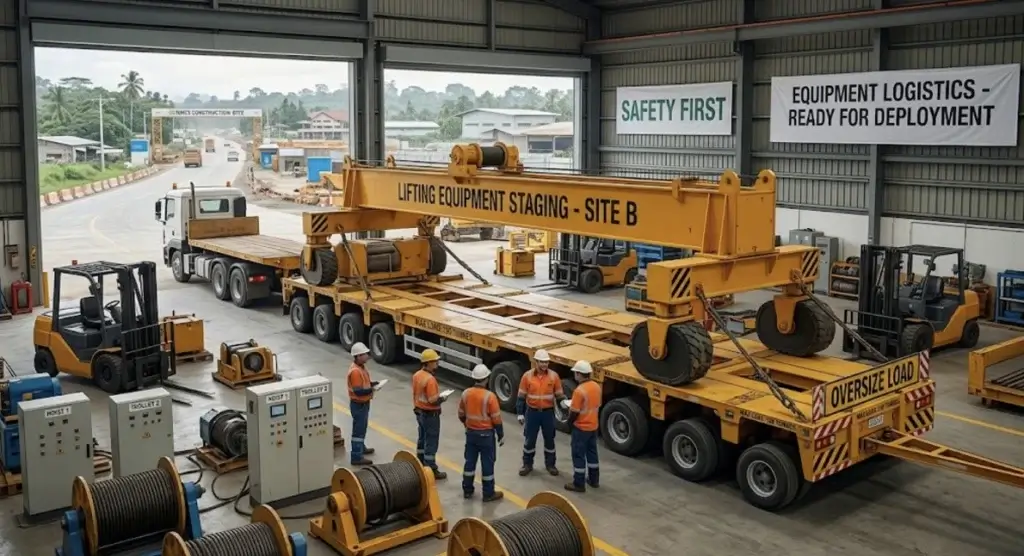
Once the core equipment is chosen, our lifting accessories range covers the gear that actually attaches to the load, including shackles, clamps, and spreader beams for awkward or oversized items.
How do you choose between a crane, a hoist, and lifting accessories?
A crane provides the structure and movement, a hoist provides the actual lifting mechanism, and accessories connect the hoist to the load safely. Skipping proper accessories to save cost is one of the more common mistakes on active sites, since a mismatched sling or shackle can fail under load even when the crane itself is perfectly rated for the job.
Singapore’s workplace safety requirements cover different types of lifting equipment, including cranes, hoists and lifting gear such as webbing slings, shackles and hooks. These requirements help ensure that lifting equipment is properly selected, maintained and used for the lifting operation.
What role do webbing slings and lifting belts play?
They are an important part of a lifting setup because they make direct contact with the load. Our webbing slings and lifting belts range is chosen based on load weight, shape, and the surface of the material being lifted, since a sling suited to a smooth steel beam isn’t necessarily suited to an irregular or delicate load.
Here’s a short breakdown of how the main accessory types typically get used:
| Accessory | Typical use |
| Webbing slings & lifting belts | Everyday loads, surfaces sensitive to metal contact |
| Shackles | Connecting slings or chains to hooks and load points |
| Clamps | Handling plate, sheet, or slab material directly |
| Spreader beams | Long or wide loads needing multiple lift points |
Is it ever acceptable to reuse older lifting accessories?
Sometimes, provided they have been properly inspected and remain in safe working condition and within their applicable requirements. But this is one area where we’re upfront rather than pushing a sale: a visibly worn sling or a shackle with an unreadable rating stamp should be retired, not stretched for one more job. That’s a genuine limit on reuse, not a sales pitch to replace everything on a fixed schedule regardless of condition.
If you’re planning a new site setup or reviewing what equipment actually fits your job, get in touch with our team, and we’ll help match the right combination to your requirements.
Frequently asked questions
Do I need different lifting accessories for indoor and outdoor sites?
Sometimes. Outdoor sites expose accessories to weather and UV exposure over time, which affects webbing slings in particular, so inspection frequency often needs to be higher outdoors than for equipment used purely indoors.
Can one crane be used with multiple types of lifting accessories?
Yes, cranes and hoists can use different lifting accessories, provided the accessory is suitable and correctly rated for the specific lifting operation.
How do I know if a lifting accessory is still safe to use?
Check for a legible rating tag, visible wear or fraying, and signs of deformation; if any of these are unclear or missing, take the item out of service rather than assume it’s safe.
Is buying cheaper generic accessories a reasonable way to cut costs?
Not where doing so could compromise the suitability, rated capacity or safety of the lifting setup.
