
Jenmon | Blogs
What Is a Semi-Gantry Crane and How Is It Different from a Semi-Girder Gantry Crane
Feb
In a busy workshop, yard, or production plant, the decision on the crane type will have a big impact on the overall running of the business. When you have been searching for lifting solutions, you may have come across such terms as semi-gantry crane and semi-girder gantry crane.
As they are similar in sound, they have certain differences that may influence your layout, budget and workflow. We would like to break it down to show you just what each type would do to your facility.
What Is a Semi-Gantry Crane
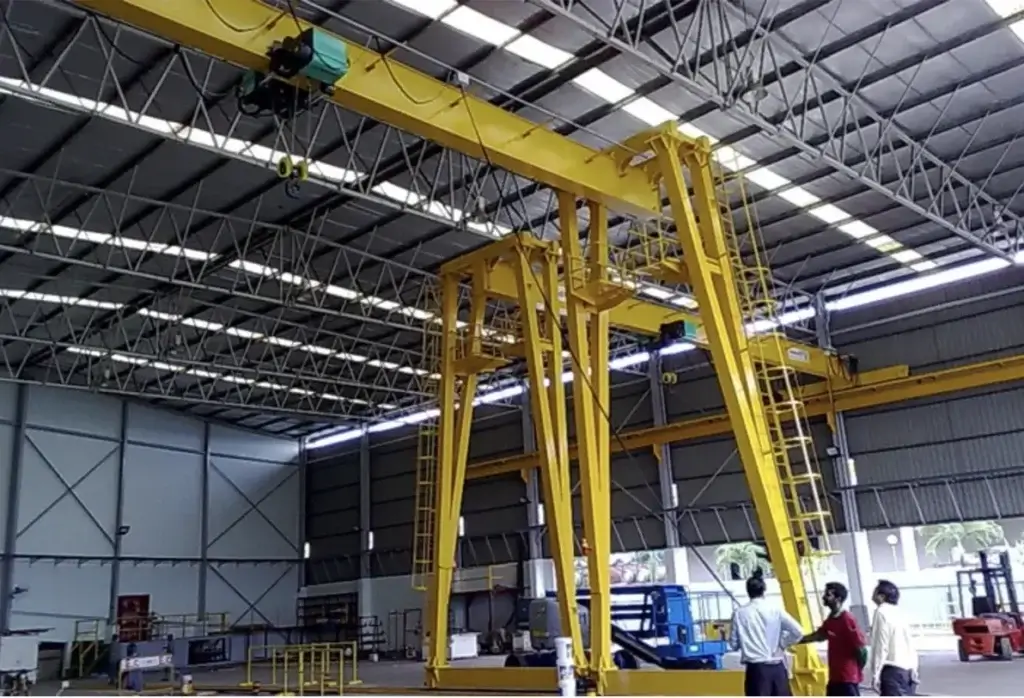
A semi-gantry crane combines features of both a gantry crane and an overhead crane. In contrast to a full gantry crane, where the legs run on rails on both sides, a semi-gantry crane is designed with one side running on a runway or overhead beam and the other side on the ground.
This design is perfect where there is not enough room to accommodate a full gantry crane, or where facilities desire to conserve on construction expenses. You still have the heavy lifting and versatility of gantry cranes, but with less structural work and reduced runway requirements.
Key Features and Components
At a glance of a semi-gantry crane, there are a few parts that run it:
- Girder – This is the central beam on which the load is sustained. Depending on the required capacity, semi-gantry cranes may be single-girder or two-girder.
- Trolley and Hoist – The trolley goes along the girder and carries the hoist, which in fact lifts your load. Depending on the capacity of the crane, you can move any form of light equipment to heavy machinery.
- Leg and Wheel System – The ground-running leg is propelled on rails, and the other part remains on the runway. This enables the crane to move through your in-house or outside environment with ease.
- Optional Features – Wire rope, remote control, audio-visual signals and even girder-mounted lights can be added to enhance operation and safety.
With these parts, a semi-gantry crane can serve a versatile and efficient purpose in industry lifting.
Where Semi-Gantry Cranes Are Used
Semi-gantry cranes can be used both indoors and outdoors. You’ll often find them in:
- Factories and workshops with a small space.
- Heavy material moving in warehouse yards.
- Production facilities with machinery layouts that frequently change.
They are used for loading and offloading, transferring heavy objects across spans, and lifting equipment. Since one leg can run on floor rails and the other on a runway, they would easily fit into various facility designs without additional columns or continuous beams.
What Is a Semi-Girder Gantry Crane
A semi-girder gantry crane has a more specific design. As the name implies, it emphasises the girder structure. A semi-girder crane typically supports the trolley and hoist on a single girder (not a traditional two-girder) used on the gantry, as with a normal girder.
This will make it cheaper and easier to assemble, yet it will offer the heavy-duty lifting features you desire. It works so well in large factories or yards where machines are located along the sides, but not in the middle of the space.
Design and Configuration Advantages
The semi-girder design consists of a number of advantages that distinguish it:
- Space-Saving Design – You will not require a complete runway system throughout the centre of your facility. One foot on the floor rails and one on the overhead runway is sufficient.
- Lower Price – Fewer materials and easier installation let you save money without compromising capacity.
- Mobile Installation – The cranes are suitable for workshops, production facilities, and outdoor industrial yards. They come with rail sweeps, ultrasonic sensors or other optional features that can be customised to suit your needs.
Common Applications and Benefits
The semi-girder gantry crane is suitable for any industry, including general manufacturing and heavy-yard crane operations. They may be installed indoors or outdoors, depending on your requirements. They offer a sure solution for lifting machinery, construction materials, or equipment over spans without the need for more than a few cranes.
Due to their low-maintenance design, they are cheaper to maintain, allowing two operational bays to suffice and giving operators the freedom to be efficient without incurring high structural costs.
Semi-Girder Gantry Cranes from Jenmon
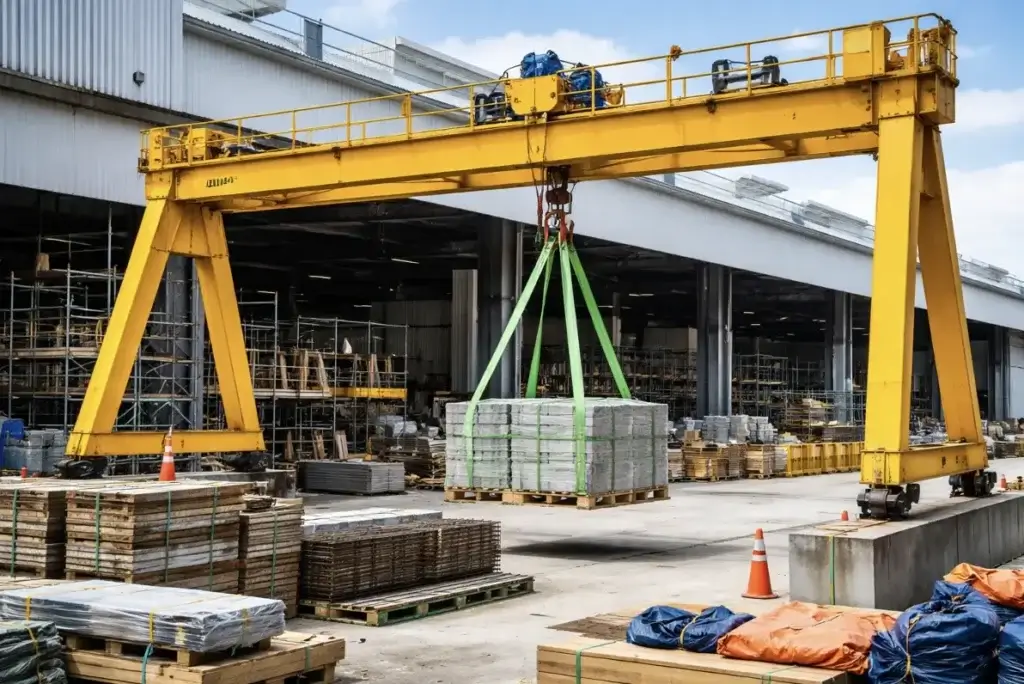
At Jenmon, we also offer semi-girder gantry cranes for both indoor and outdoor use. They are compact, cost-effective, and ideal for factories or yards with machines along the sides.
The cranes we design are tailored to your production flow and facility layout, so you receive a crane system that actually suits you. Optional features include:
- Girder-mounted lights
- Audio-visual signalling devices
- Rail sweeps
- Ultrasonic sensors
These optional additions make the crane safer and easier to use, but it remains very functional in industrial usage.
Conclusion
The knowledge on how to differentiate between a semi-gantry crane and a semi-girder gantry crane would help you make wiser decisions for your facility. Semi-gantry crane is tough and versatile, and semi-girder crane offers you a cost-effective and space-saving crane.
Require an efficient crane that fits your needs? We can assist. Call Jenmon to set up a lifting solution that fits your needs, customised and professionally advised.
