
Jenmon | Blogs
Rising Workplace Injuries? How Workstation Cranes Reduce Manual Handling Risks
Feb
Workplace injuries are increasing, and many of them are linked to manual handling tasks. The heavy lifting, delivery, and placement of these materials can overwork your staff and delay production. That’s where workstation cranes come in. You can secure your employees with the right lifting solution, which improves safety and maintains the continuity of the working process, especially in challenging environments like MRT depots, shipyards, and terminals.
Why Manual Handling Causes Workplace Injuries
Injuries are nearly unavoidable when your team is carrying heavy loads daily. This may result in strains, sprains, and permanent musculoskeletal problems when people bend, twist, or handle weights beyond safe limits. The risks increase when lifting overhead or working in awkward positions, which can lead to accidents.
During peak times in shipping or airport operations, injuries can be costly. Delays in material movement, missed deadlines, and reduced productivity can quickly accumulate. That is why it is not only about safety; you should also reduce the effort required to handle operations manually.
How Workstation Cranes Improve Safety
A workstation crane is not simply a tool but a solution that lifts and moves materials while keeping your team safe. These cranes are designed to perform repetitive tasks ergonomically, allowing your staff to focus on the job rather than worry about heavy lifting.
Jenmon offers a comprehensive range of workstation crane systems designed for different operational requirements. Bridge cranes, freestanding and ceiling-mounted systems, can all be customised to suit your workflow. Jib cranes and enclosed track systems can also contribute significantly to load control and reduce strain.
Types of Workstation Cranes
Cranes are not all the same, and therefore, you should be aware of your alternatives.
- Bridge Crane and Workstation Bridge Cranes: They go over your working area and are capable of moving material effectively along a predetermined path. Ideal for overhead lifts in MRT depots or terminals.
- Monorail Systems and Enclosed Track: The best option when accurate movement in narrow areas is required. The track rail is enclosed so that the trolleys and hoists do not interfere with your operations.
- Freestanding Solutions and Ceiling-Mounted Solutions: Flexibility is important. Freestanding cranes are a good choice when mobility is required, whereas ceiling-mounted cranes can save floor space.
- Jib Cranes: These are well-suited for limited-span work areas or low headroom, and they offer efficient lifting and moving without sacrificing safety.
All types offer specific advantages, yet they all strive to minimise manual operations, enhance staff performance, and ensure their security.
Key Features of Effective Lifting Systems
When selecting a workstation lifting system, safety and operational efficiency should be the primary considerations. The system should be durable and designed to safely and consistently handle your required load capacity. Choose the lifting capacity, trolley, and span to fit your workflow.
Adequate headroom and proper workspace layout are essential for safe and efficient lifting operations. You can lift and transport materials without obstructing the working areas using appropriate overhead crane systems or workstation crane systems. That makes your operation run smoothly and minimises downtime.
Boosting Productivity While Reducing Risks
Safety is not the only issue with workstation cranes; they also enhance productivity. With little effort and no wasted time, your crew can load and offload faster. It simplifies the workflow, minimises downtime, and allows for a focus on the work to be done rather than on dealing with injuries.
Crane and monorail systems can be effectively integrated into confined or high-traffic environments. It could be a terminal, shipyard, or MRT depot, but the right lifting solution would ensure your employees work efficiently and remain safe.
Choosing the Right Crane for Your Facility
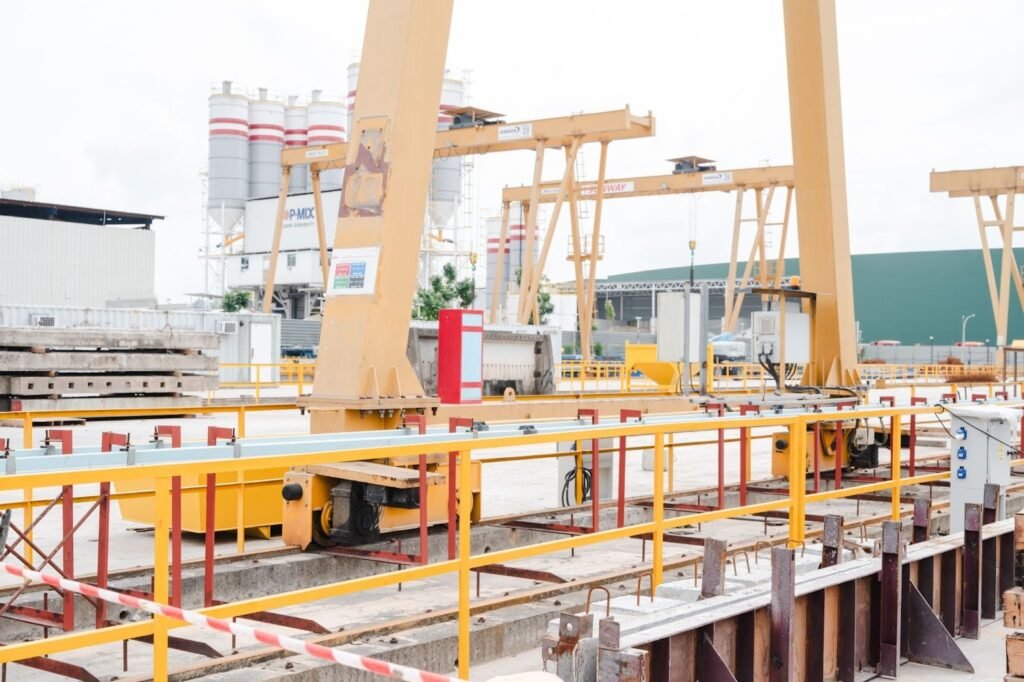
The selection of the correct crane is based on your work area and crane requirements. Are your ceilings high, or are you short of headroom? Would an enclosed track system keep your workflow clear? How much lifting capacity do you require? Thinking through these details ensures you get a solution that works for your facility.
Our workstation lifting systems come with options for runways, enclosed track rails, and flexible layouts. You can customise each system to fit your unique work areas while maximising safety and productivity.
From Design to Service: Jenmon’s Complete Crane Solutions
At Jenmon, we support you throughout the entire project lifecycle. We are the sole Authorised Agent of Verlinde in Singapore, and we provide, install, test and commission cranes that suit your requirements. Another advantage of our company is that we offer 24/7 after-sales service to maintain the lifting system in great condition over the years.
Our products are tailored to meet the needs of challenging working environments such as shipyards, MRT depots, and terminals, and we will assist you in minimising the risks associated with manual handling without adversely affecting working processes. Our workstation cranes will enable you to lift, flow, and handle materials effectively, keeping your workforce safe and your operations on track.
Conclusion
Injuries at work which involve manual handling need not be part of your workplace. A workstation crane is an ergonomic, safe, and effective solution for transporting and lifting heavy loads. Selecting an appropriate crane secures your staff, enhances the work process, and reduces work stoppages.
Improve safety and operational efficiency in your facility with a customised workstation crane solution. Contact us at Jenmon today to find the perfect workstation crane for your needs.
