
Jenmon | Blogs
Wind Load Impact on Heavy Duty Gantry Crane Stability
May
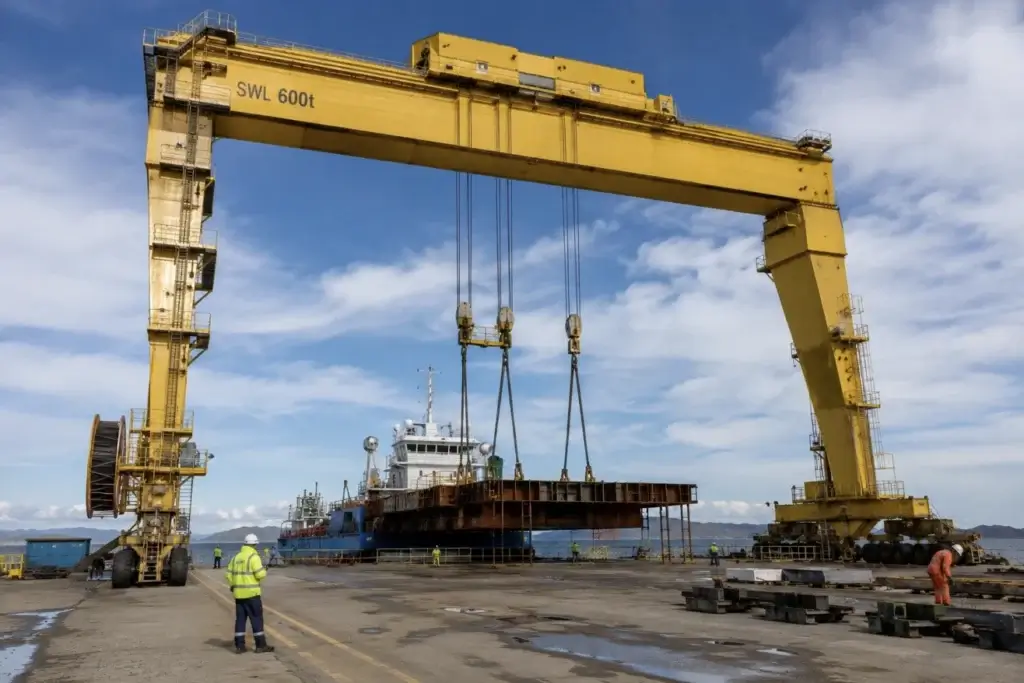
Your lifting operations may be affected in the event of strong winds. Coastal and offshore environments are known for harsh and unpredictable conditions. These are not conditions where a heavy-duty gantry crane requires only lifting power. It must also be stable, reliable, and intelligently engineered.
Wind load affects all components of a gantry crane system. Strong gusts can affect control and safety on the beam and trolley, the hoist and spreader, and more. This is why heavy-duty equipment that maintains performance is necessary.
Why Wind Load Creates Challenges for Every Gantry Crane
Coastal and offshore locations leave cranes fully exposed to harsh weather. Unlike indoor warehouse operations, outdoor construction sites and shipyard facilities are subject to constant wind pressure. This pressure can push loads off balance and create sway during lifting operations.
A heavy-duty gantry system must stay stable while moving large-scale materials and equipment. You often lift loads high above the ground, which increases movement when wind speeds rise. Even small swings can slow productivity and create safety risks.
Several crane components face direct impact from wind load, including:
- The beam that supports the load
- The trolley that moves across the structure
- The hoist that controls lifting tasks
- The spreader used in container gantry crane operations
Without proper control systems, these movements can affect operational reliability and material handling efficiency.
Common Coastal and Offshore Environments Where Heavy-Duty Gantry Systems Operate
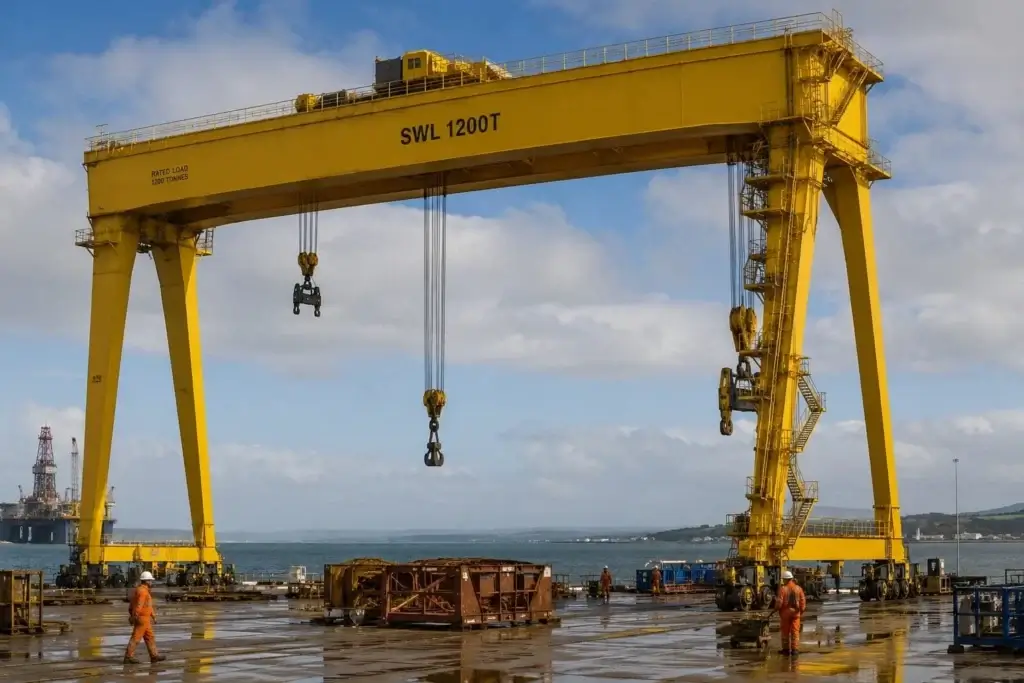
You’ll often see gantry crane industrial lifting systems in demanding industrial applications. High-performance cranes are utilised daily in ports, shipbuilding yards, manufacturing plants, and outdoor construction sites.
These environments expose equipment to:
- Salt-heavy air
- Strong coastal winds
- Heavy rain and moisture
- Constant lifting operations
- Corrosion risks
A corrosion-resistant heavy-duty crane helps you maintain durability in these conditions. You need equipment that can lift heavy materials while staying stable during daily industrial operations.
Container gantry crane systems face even greater challenges. Open dock areas allow wind to move freely around containers and spreader systems. Rail-mounted gantry crane setups and RTG units often work in wide-open spaces with little protection from weather conditions.
For this reason, many gantry crane manufacturers now include anti-sway technology and reinforced support systems in their designs.
Gantry Crane Types and Their Stability Differences
Not all cranes are equal in coastal settings. Choosing the right gantry crane is a complex process that depends on the type of work you need to do, the capacity required, and your working environment.
A double girder gantry crane provides greater support for heavy-duty lifting operations. Since it uses two beams, it handles heavy loads with better balance and control. Many shipyards and industrial operations choose girder gantry cranes for this reason.
A single girder gantry system works well for lighter lifting tasks. You’ll often find these cranes in warehouse facilities and smaller industrial applications where operators need flexibility and lower gantry crane price points.
You may also come across:
- Semi gantry crane systems for limited spaces
- Adjustable gantry setups for flexible operations
- Mobile gantry crane units for temporary construction sites
- Double girder gantry crane systems for high lifting capacity
Safety Features That Improve Stability in High-Wind Conditions
Modern lifting systems have smart technology to improve stability and control. Such features enable you to remain productive while minimising operational risks.
One of the most important features is the anti-sway system. These systems reduce load movement during lifting operations. They help your operators maintain better control even when wind conditions change quickly.
Many heavy-duty gantry crane systems also include PLC controls. PLC technology helps monitor crane movement, load positioning, and operational performance in real time.
Some important stability features include:
- Anti-sway control systems
- Wind monitoring sensors
- Reinforced beam structures
- High-quality braking systems
- Automated PLC controls
Why Overhead Cranes and Bridge Cranes Face Different Wind Challenges
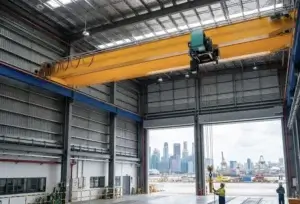
Often, an overhead crane or bridge crane is used inside a building. This means that these systems are much less affected by wind than a heavy-duty gantry crane.
Warehouse facilities often protect overhead crane systems from harsh weather. That allows operators to focus more on lifting capacity and productivity rather than on environmental conditions.
Outdoor gantry systems work differently. Open-air work is more likely to expose you to wind, rain, and moisture. Structural supports must be more robust, and stability systems need to be improved to ensure safe lifting activities.
What Affects Gantry Crane Price in Coastal Installations
Coastal crane systems tend to be more expensive due to the need for additional protection and engineering. Corrosion-resistant materials, anti-sway technology, and reinforced parts are all factors that affect gantry crane prices.
There are also specialised solutions required for large-scale lifting operations. Many businesses customise crane systems to match specific industrial operations and lifting tasks.
Here at Jenmon, we can assist you with creating a lifting solution that is appropriate for your environment, lifting capacity, and requirements. Experience quality engineering for reliability, durability, and long-term productivity with us today!
