
Jenmon | Blogs
Choosing the Right Indoor Crane for Limited Spaces: Key Design Considerations for Facilities
Apr
The selection of an appropriate indoor crane could be the difference-maker when it comes to moving heavy materials in a facility with limited space. An inadequately selected crane may undermine business, pose security hazards, and even waste funds.
Nevertheless, with careful planning, you can find a system that lifts well, moves without any issues, and fits in your free space. We will take you through some of the major considerations you should keep in mind.
Why Space Matters for Indoor Cranes
Not every crane is designed to fit in narrow areas. With limited floor space, you must consider the crane’s movement, the clearance it requires, and whether it can reach all the areas where lifting is needed. Overhead cranes, jib cranes and gantry cranes do not work in the same way. Hence, with your knowledge of the type of space you have, you may make the right decision in choosing which indoor crane is best suited for you.
Look at the size of your facility, aisle width and equipment and material locations. A small or mini crane can be more effective than a regular one when space is limited. A foldable or portable system can also be a lifesaver, even in places with limited floor space.
Types of Indoor Cranes for Limited Spaces
When discussing indoor cranes, we may single out several key ones:
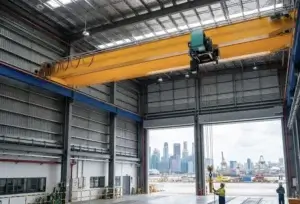
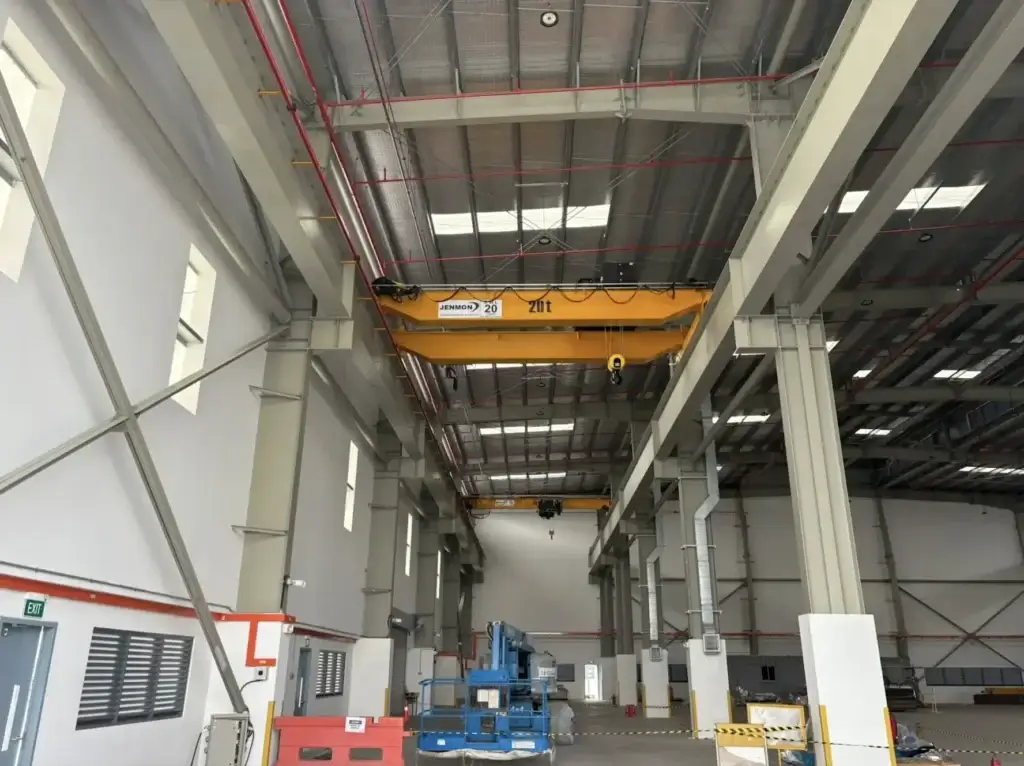
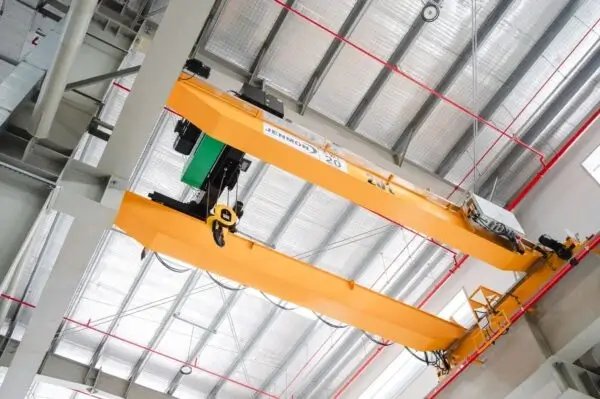
- Overhead Cranes: These move along runways over your working area, thus saving floor space. They are effective for transporting materials over long distances in factories or warehouses.
- Jib Cranes: These cranes are mounted on the floor or a wall and rotate to cover a fixed radius. They are ideal for moving heavy products in a small area.
- Gantry Cranes: These are free-standing cranes that move along tracks laid on the floor. They are efficient in cases where you are not able to install overhead.
At Jenmon, we’ve designed several engineered cranes that suit indoor use. For example, our Overhead Crane works well in industrial facilities where you need a strong, reliable lift without taking up much floor space.
Our MRT Trains & Depot Crane is built for maintenance depots, where covered spaces and controlled environments are key. Both systems highlight how a properly chosen crane fits your facility’s needs perfectly.
Key Design Considerations for Indoor Cranes
Lift Capacity & Weight Limits
The first consideration is the weight your crane would have to carry. You can get a 1-ton, 2-ton, 5-ton, or 10-ton crane; however, the lift capacity determines the nature of the system you will be installing. Ensure that the crane is capable of lifting the heaviest loads you would like to move without any difficulty.
Compact & Portable Designs
When space is compromised, consider mini, portable, foldable, or freestanding cranes. These choices will enable the maximisation of floor space whilst still working with heavy materials. Other portable cranes are even battery-powered or hydraulic-powered, enabling you to use them anywhere without any fixed power supply.
Power Options
Various indoor cranes have varying power demands. Indoor work is usually done with electric hoists, which are easy to manage and clean. Other systems are powered by diesel or hydraulics, and they can be useful for moving heavy equipment. The decision you make will depend on the type of facility you operate and the applications you use.
Travel & Mobility
Consider how your crane will move. Overhead cranes operate on runways, whereas mobile or floor-based systems can be moved around. There are jib cranes that would turn up to 360 degrees, providing you with the maximum coverage with a small footprint. The right mobility ensures that your lifting machines can access all the points at which they are required.
Material Handling Applications
Think about what you are lifting and at what frequency. To build a structure, construct factories, or overhaul a plant, your crane must perform repetitive lifting safely and efficiently. The system must be in line with your working process, whether it involves the movement of plastic parts, heavy machinery, or construction materials.
Safety and Performance Tips
The best indoor crane can be as good as its operation. Ensure that your team is familiar with the use of chain hoists, the floor markings, and the system’s maintenance. Aspects such as remote control and robustness in the build enhance functionality and help prevent accidents. When a crane is in good condition, it will last longer and help ensure that your facility operates efficiently.
Cost-Effective Choices and Cranes for Sale
Locating a crane to buy for your facility does not necessarily have to strain the budget. Capacity, application, and the type of system must be considered to achieve the optimum value. Small, powerful, and strong cranes can be more cost-effective in the long run than low-priced large cranes.
Conclusion
The question of selecting an appropriate crane indoors for a facility with limited space is all about knowing what you need, evaluating the space you have, and finally selecting a system that is compact, powerful, and productive. From jib cranes to overhead cranes and even gantry cranes, the right choice makes your operations safe and speedy.
Need the right indoor crane in your facility? Explore our crane options at Jenmon to find the ideal fit for your space and workflow.
