
Jenmon | Blogs
Semi Gantry Crane Safety and Maintenance Best Practices
Jun
Every square metre counts when you run a busy factory floor. You need to move heavy loads safely without cluttering your floor space. That is exactly why choosing a semi-gantry crane matters. Instead of taking up valuable room with massive supports on both sides, this clever configuration maximises your space utilisation. It delivers heavy-lifting power without creating cluttered workspaces or compromising productivity.
For businesses, investing in a semi-gantry crane makes good sense. However, you should ensure that you treat it properly if you wish to get the best value from your investment. With a few simple practices and routine inspections, years of trouble-free operation can be achieved. Let’s take a look at the best ways to keep your machinery in top shape.
What Makes a Semi-Gantry Crane the Right Crane for Your Narrow Workshop?
Choosing between a standard gantry crane and a semi-gantry setup depends on your building layout. A full gantry crane uses two legs that travel along floor tracks. In contrast, a semi-gantry design uses just one leg on a ground rail. The other side of the crane rides on an overhead runway beam attached to your building structure.
This unique layout makes it the right crane for a narrow workshop, combining the attributes of an overhead crane and a complete gantry system. This saves space and keeps your floor open, allowing forklifts to move freely while workers can operate safely and efficiently. This adaptability makes it a practical choice for tight, fast-paced production environments.
Choosing the Right Setup: Single Girder vs Double Girder Features
Your daily lifting needs should determine the crane features you require. You will typically choose between a single girder gantry crane and a double girder system. A single girder setup works beautifully for light to medium tasks. It is lighter, faster to install, and puts less strain on your building tracks.
Always match your crane choice to your verified maximum load requirements. If you handle massive loads every single day, a double girder design offers extra strength and better lifting height. It holds the hoist in place between two beams and provides additional headroom. In all cases, never exceed the rated capacity. When its lifting capacity is exceeded, it can cause serious safety problems as well as damage to the main girder.
Essential Ground Rail and Overhead Runway Inspections
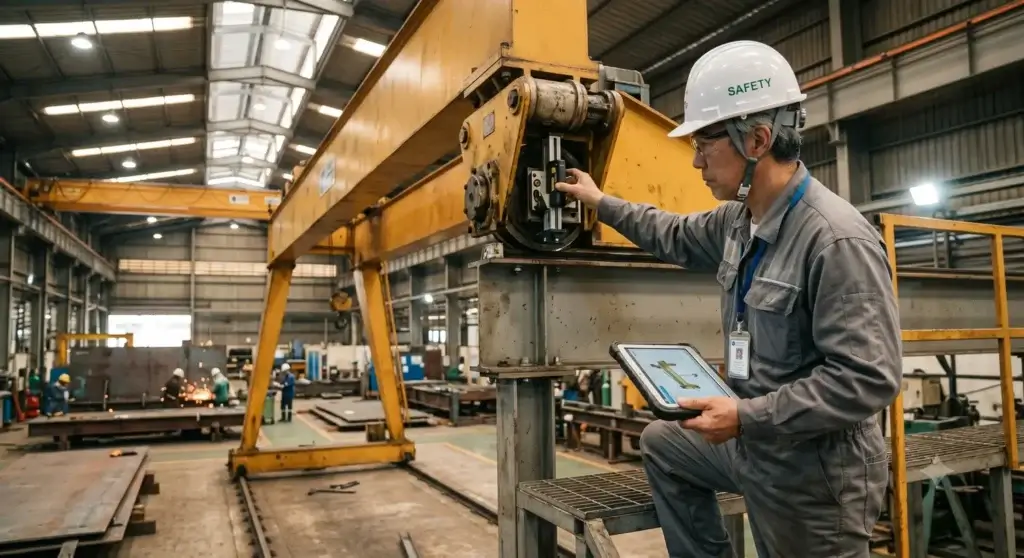
A semi-gantry crane travels on two different levels, so alignment is everything. The lower leg rolls on a ground rail, while the upper side travels along an elevated runway beam. You must keep both pathways perfectly clean and clear.
- Check the lower track daily for dirt, metal scraps, or debris.
- Check the top runway beam for loose bolts or signs of structural damage.
- Listen for unusual grinding noises during travel.
If the wheels hit an obstacle on the floor, the machine twists. This twisting forces the motor to work much harder and can warp the frame. Clean tracks mean smooth travel, less friction, and a much longer lifespan for your drive systems.
Balancing Lifting Height and Clearance for Smooth Operations
Safe operation relies on clear boundaries. Operators must always know the maximum lifting height before they pick up a load. Raising an item too high can cause it to strike the upper hoist limits or the girder itself.
You also need to monitor your horizontal clearance. Never swing loads over workshop machinery or storage racks. Train your team to lift items vertically before moving them sideways. Side-pulling damages the wire rope and puts uneven stress on the structure. This will help you use the equipment for longer before it wears out and ensure heavy materials are handled in the proper way.
Why Preventive Maintenance is Your Best Long-Term Strategy
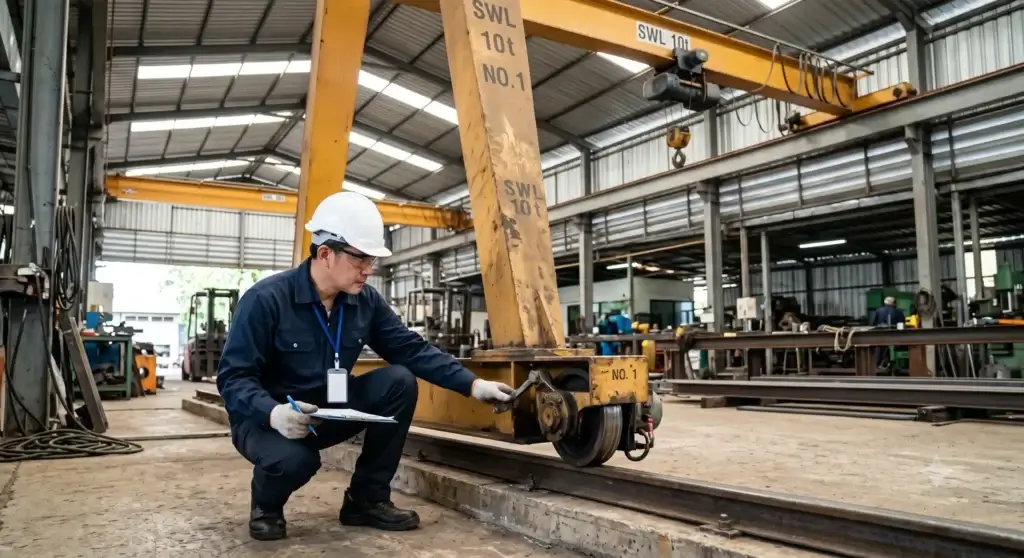
Waiting until a mechanical failure occurs before taking action can be expensive. It not only affects productivity, but it also disrupts your schedule. Whether you have a full gantry or semi-gantry crane, regular maintenance will help protect your investment.
Routine maintenance tasks, such as lubricating gears and inspecting brake pads, are cost-effective ways to prevent major failures. A small expense today can save you from much higher costs later. When your equipment is consistently well-maintained, your business is less likely to experience downtime.
Keep Your Operations Moving with Jenmon
As the market leader in our industry, we see the need to help both our present and future customers understand the importance of prevention programmes. These are important for ensuring our customers’ smooth, continuous operations at their production facilities throughout the lifetime of their cranes.
If you schedule regular maintenance and inspections with us, your crane’s service life will be extended. Moreover, there will be less critical downtime and compliance violations, and life-threatening concerns can be avoided as well. The result is safer operations and meaningful savings in time, resources, and money.
Contact our team at Jenmon today to set up your preventive maintenance plan.
