
Jenmon | Blogs
Essential Electrical Electronic Crane Components Every Crane Owner Should Know
Mar
When managing a construction site or supervising heavy equipment, you need to be aware of how important each component of a crane is. Cranes are not large metallic machines but multidimensional systems with every detail, particularly the electrical and electronic parts, being crucial. Detailed knowledge of these parts can help you make smarter maintenance, safety, and efficiency decisions.
Let’s walk through the essential electrical and electronic crane components that every crane owner should know, and highlight the reliable options you can get from us at Jenmon.
Hoists – The Heart of Every Lift
The component of the crane that is used for lifting and lowering heavy loads is the hoist. The hoist is essential for any crane operation. Wire rope or chains can be used with hoists, and the choice depends on the weight being pulled.
Ensure the hoist is in proper condition to lift loads safely and reduce the risk of accidents on site. As a site manager, you can save time and money by keeping an eye on the hoist, cables, and wear and tear. A dependable hoist can move a heavy load either horizontally or vertically without downtime.
Booms and Jibs – Extending Reach Safely
The crane boom is what gives your crane reach. It is the long arm which reaches out to pick up materials on your site. There are cranes with a lattice boom, which is light and powerful, and telescopic boom cranes, which have adjustable reach.
The jib is an extension of the boom and is frequently used to increase the crane’s effective working radius. By selecting the appropriate boom and jib arrangement, you can be sure you can handle heavy loads without issues, even at complex angles. Monitoring boom tips, crane hooks, and the crane structure helps prevent stress and ensures operator safety.
Outriggers and Counterweights – Stability Matters
The best crane won’t lift safely without proper outriggers and counterweights. The base of the crane is stabilised by outriggers, and counterweights balance the load.
Before each lift, ensure outriggers and counterweights are properly configured. When used correctly, outriggers and counterweights reduce the risk of crane tipping and enable cranes to move massive loads. To prevent accidents on sites where you hire cranes, it is equally important to check these elements, such as the hoist or boom.
Electrical Systems – Keeping Cranes Operational
The electrical systems of a crane are crucial for its smooth operation. Motors, cables, pulleys, and sheaves are all involved in moving heavy loads. Electrical components, particularly in overhead cranes, must be applied properly to ensure safe and reliable operation.
It is involved in the operation of wire rope management, hydraulic systems, and every aspect of electrical operation throughout the crane, ensuring uniform performance. A site manager needs to know how such systems operate because it would assist them in planning their maintenance and precluding unplanned downtime. Long-lasting cables and correct routing ensure that your crane will run efficiently and minimise expensive repairs.
Control Systems – Precision at Your Fingertips
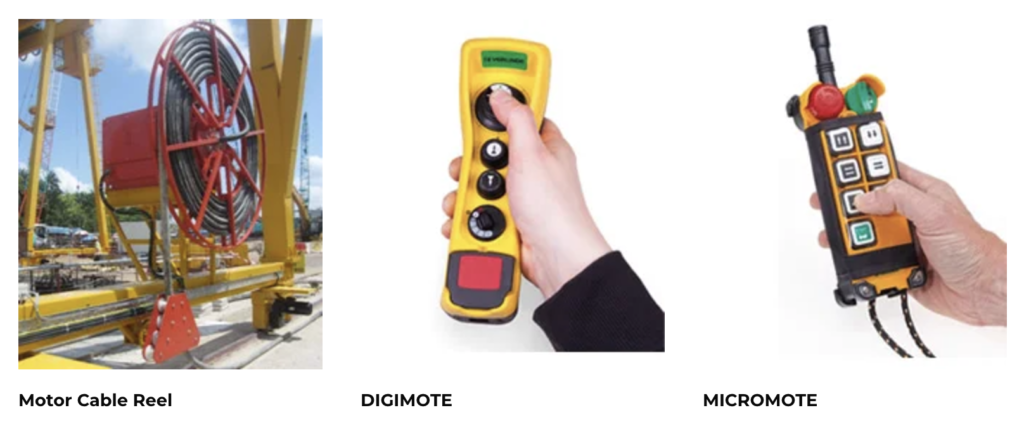
The modern cranes are based on control systems in order to be precise and safe. Radio remote controls such as Digimote, Micromote, and Euromote provide operators with an opportunity to operate the hoist and crane in a safe location.
These electronic components improve efficiency, minimise human error, and help operators handle heavy loads with precision. In your case, understanding the operation of these systems implies that you can make informed choices when renting cranes, hiring operators, or selecting upgrades to the already owned fleets.
Get Your Electrical Crane Components from Jenmon
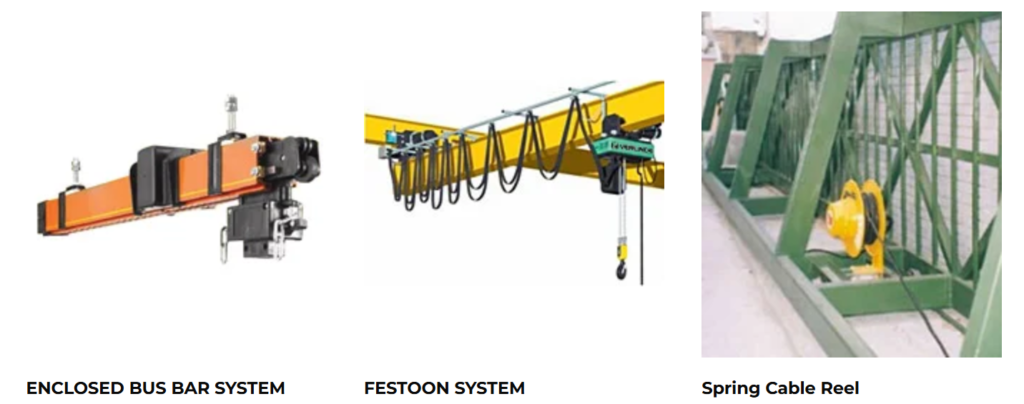
At Jenmon, we provide a wide range of electrical and electronic crane components designed for reliability and durability. Our products are used to help make your cranes perform at their best, whether it is dealing with heavy loads or transporting equipment horizontally across a site.
Here’s a snapshot of what we offer:
- Enclosed Bus Bar System – Keeps your power supply organised along the crane.
- Festoon System – Manages cables and hoses for movable machinery.
- Spring Cable Reel – Ensures orderly winding of cables, hoses, and ropes.
- Motor Cable Reel – Heavy-duty option for thick cables.
- Digimote – Radio control system for hoists and cranes.
- Micromote – Radio remote control for hoists and travelling cranes.
- Euromote – Radio remote control system for cranes.
- Electric Cabinet – Sealed IP55 steel cabinet for electrical safety.
- Movable Box – Moves along the crane independently of the hoist.
- Limiter – Load limiters for wire rope and chain hoists, handling 60–37,500 kg.
Should you need further details, you can request a technical sheet for any component. Each part is built to last, keeping your site running efficiently and safely.
Conclusion
It is not merely technical; it is smart management to know the electrical and electronic components of your crane. Being familiar with the hoist, boom, jib, outriggers, counterweights, and control systems will help you make a decision that keeps your site safe, your operators confident, and your cranes durable.
At Jenmon, we believe in providing components that make your cranes reliable and your operations smoother. Check out our range of electrical and electronic crane components today and ensure your next lift is efficient, precise, and worry-free.
