

Uncategorized
Key Overhead Crane Parts You Should Keep in Stock
Nov
When you depend on an overhead crane to transfer and move heavy objects, you already have an understanding of how significant each component of your crane system is. One little hitch will halt all your work. As soon as it occurs, floors are missed, expenses escalate, and safety concerns are heightened. This is why it is a good idea to store important overhead crane parts.
The availability of the appropriate crane components implies reduced downtimes and increased productivity. Whether it’s a bridge crane, jib crane, or gantry crane, you aim for the same thing: maintaining your material handling process in an orderly and secure manner.
Overhead Crane Parts You Must Have in Stock
Every type of overhead crane relies on a combination of strong and reliable components. These parts and components support the bridge, carry the hoist, and move the load safely across your workspace. When one component fails, the entire system struggles to function. By keeping the main overhead crane components ready, you avoid lengthy delays and keep your equipment in top shape. Let’s look at the key crane parts you should always have on hand.
Hoist – The Core of Every Lift
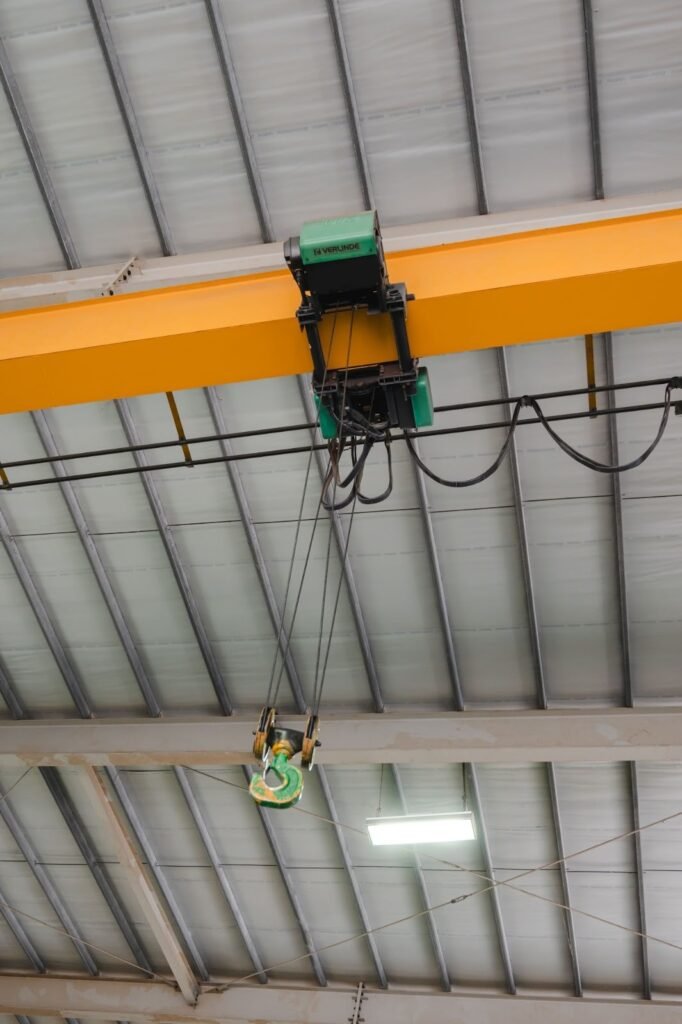
The hoist does the heavy lifting, raising and lowering loads with either a wire rope or a chain, depending on the kind of overhead crane you have purchased. A wire rope hoist should be used when objects to be lifted are heavier, whereas a chain hoist is appropriate when the load is lighter. It’s important to keep spares of drum bearings and hook safety latches. These components hold the hoist and maintain your crane to lift and lower heavy materials without any difficulties.
Trolley – Enables Side-to-Side Movement
The trolley will deliver the hoist and use it to pass side-to-side along the bridge. This enables your crane to load items with accuracy. Trolleys wear out over time due to the motion and pressure of their weight. When this happens, an imbalance occurs in the lifting, and the system becomes impaired. With the spare trolley (or spare wheels, bearings and drives) present, you can maintain a smooth operation in either direction with minimal downtime.
End Trucks – Supporting the Bridge
The bridge is linked to the runway rails through end trucks. They take the weight and provide a smooth flow of the bridge across the span of your crane system. Rusted-out end trucks can cause alignment issues or rough and noisy movement. It is also a good idea to have spare end truck wheels, bearings, and motors, and limit switches of travelling cranes. Being prepared is the key to having your overhead bridge crane operating smoothly on its rails by being able to change the worn parts easily.
Runway and Girders – The Support Structure
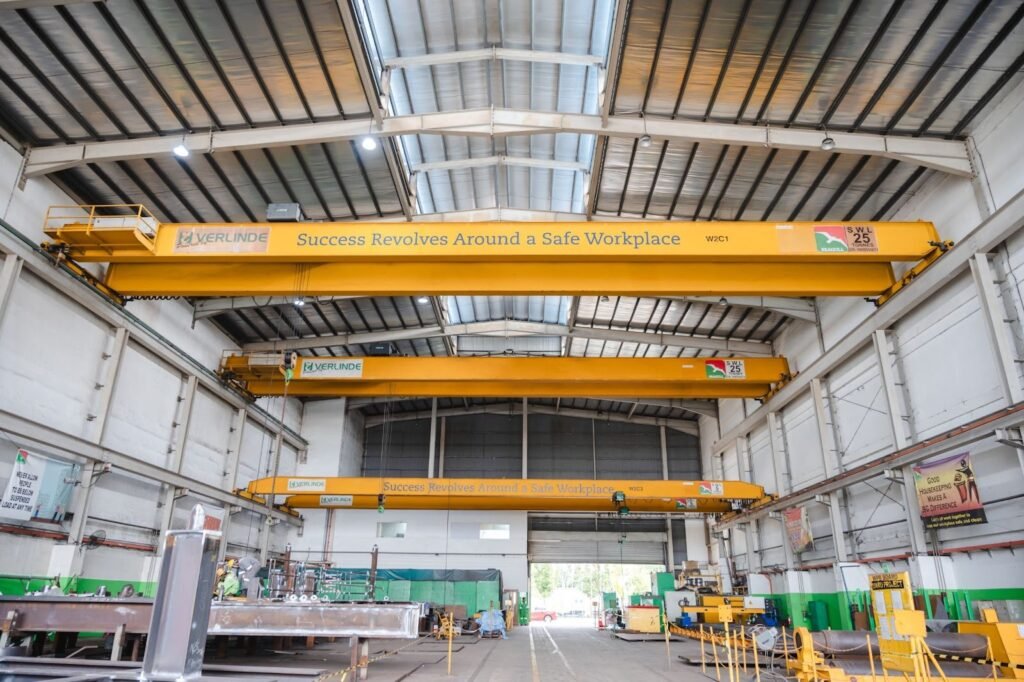
The runway and girders carry the weight of your entire crane system. They provide the strong support structure that allows the bridge to move safely. You can find single girder and double girder setups, depending on your load requirements. While these structures are far too large to keep in stock, and typically last 15 to 20 years, their lifespan can be shortened when exposed to outdoor weather or harsh chemical environments.
This is why regular checks matter. They help you spot wear or loose bolts early and ensure the right protective paint is used to keep the structure in good condition. It’s still smart to keep smaller items like runway clips and fasteners on hand so you can quickly fix minor support issues and keep your top-running crane steady and safe.
Controls and Electrical Components – Safe and Precise Operation
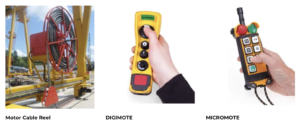
The control system of your crane keeps everything running smoothly. Pendants, wireless remotes and conductor bars are all important in directing movements. Malfunctioning controls can pose a safety risk and prevent your crane from lifting or dropping loads.
Backup pendants, pendant buttons (and emergency stop buttons in particular), connectors, control cables, remote-control batteries, contact elements and contactors should always be stored. Ensure that all these components are functioning correctly and safely. Having these in place will enable you to work your crane efficiently and ensure that your team is safe and that your workflow is efficient too.
Conclusion
Stocking the correct overhead crane parts is a time-saving, cost-saving, and stress-free process. It also enables your crane system to remain in a state of readiness to lift and move heavy loads when needed. Spare parts are also solutions that prolong the life of your crane and enhance the level of safety within your premises. The preplanning of crane parts is another way to maintain the smooth operation of your operations without incurring expensive downtime costs.
At Jenmon, we assist you in selecting the correct overhead crane components and provide professional consulting on your overhead lifting requirements. Contact us now to keep your crane system in optimal condition.
